
PRP Injections
Platelet-Rich Plasma therapy uses concentrated platelets from your own blood to support the body's natural healing processes. PRP may be considered for selected joint, tendon, ligament, and soft-tissue conditions.
PRP May Be Considered For
- Certain knee and joint conditions
- Selected tendon conditions
- Some soft-tissue injuries
- Certain sports-related injuries
- Patients seeking a minimally invasive option
What Is PRP Therapy?
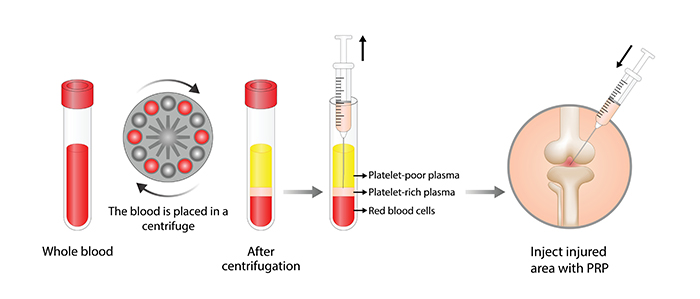
Platelet-Rich Plasma, or PRP, is prepared from a small sample of your own blood. The sample is processed to concentrate platelets within the plasma before being injected into the selected treatment area.
Platelets contain proteins and growth factors involved in the body's healing processes. PRP may be used as part of a treatment plan for selected musculoskeletal conditions.
- Uses components derived from your own blood
- Performed as an injection procedure
- Treatment is individualized to the patient
- Appropriate candidates are determined after evaluation
Potential Benefits
PRP may offer potential benefits for selected patients. Your provider will determine whether it is appropriate based on your individual condition.
Why Patients Consider PRP
- Uses a patient's own blood components
- Minimally invasive treatment approach
- May support natural tissue-repair processes
- May be considered for selected joint conditions
Areas That May Be Treated
- Knee
- Shoulder
- Elbow
- Selected tendons and soft tissues
How PRP Works
PRP treatment generally involves three main steps. Your provider will explain the specific process recommended for your condition.
Blood Draw
A small amount of blood is collected, similar to a standard blood draw.
PRP Preparation
The sample is processed to concentrate platelets within the plasma.
Injection
The prepared PRP is injected into the selected treatment area.
Conditions PRP May Be Considered For
PRP is not appropriate for every condition. An evaluation is necessary to determine whether this treatment may be suitable.
Joint & Tendon Conditions
- Certain knee osteoarthritis cases
- Selected tendon conditions
- Tennis elbow
- Selected shoulder conditions
Other Musculoskeletal Concerns
- Certain sports-related injuries
- Selected soft-tissue injuries
- Chronic musculoskeletal conditions
- Conditions determined appropriate after evaluation
PRP Therapy Videos
Explore educational videos about PRP therapy, joint injections, the treatment process, and what patients may want to know before treatment.
Gel + PRP Knee Injections
Learn about combining gel and PRP injections for selected knee pain and arthritis concerns.
Platelet-Rich Plasma Injections
Explore PRP injections and learn more about this regenerative treatment approach.
PRP Therapy
A quick educational look at PRP therapy and regenerative joint care.
PRP Injection Education
Learn more about PRP injections and how they may be used in selected cases.
PRP Joint Treatment
A quick introduction to PRP treatment for selected joint and musculoskeletal concerns.
PRP Patient Education
Helpful information for patients interested in learning more about PRP therapy.
What Patients Should Know
Understanding the treatment, potential benefits, risks, and alternatives can help you make an informed decision with your healthcare provider.
- PRP is not appropriate for every patient or condition.
- Results can vary depending on the condition being treated.
- Your provider will review your medical history and symptoms.
- Potential risks and alternatives should be discussed before treatment.
- Follow-up and activity recommendations may vary by patient.